
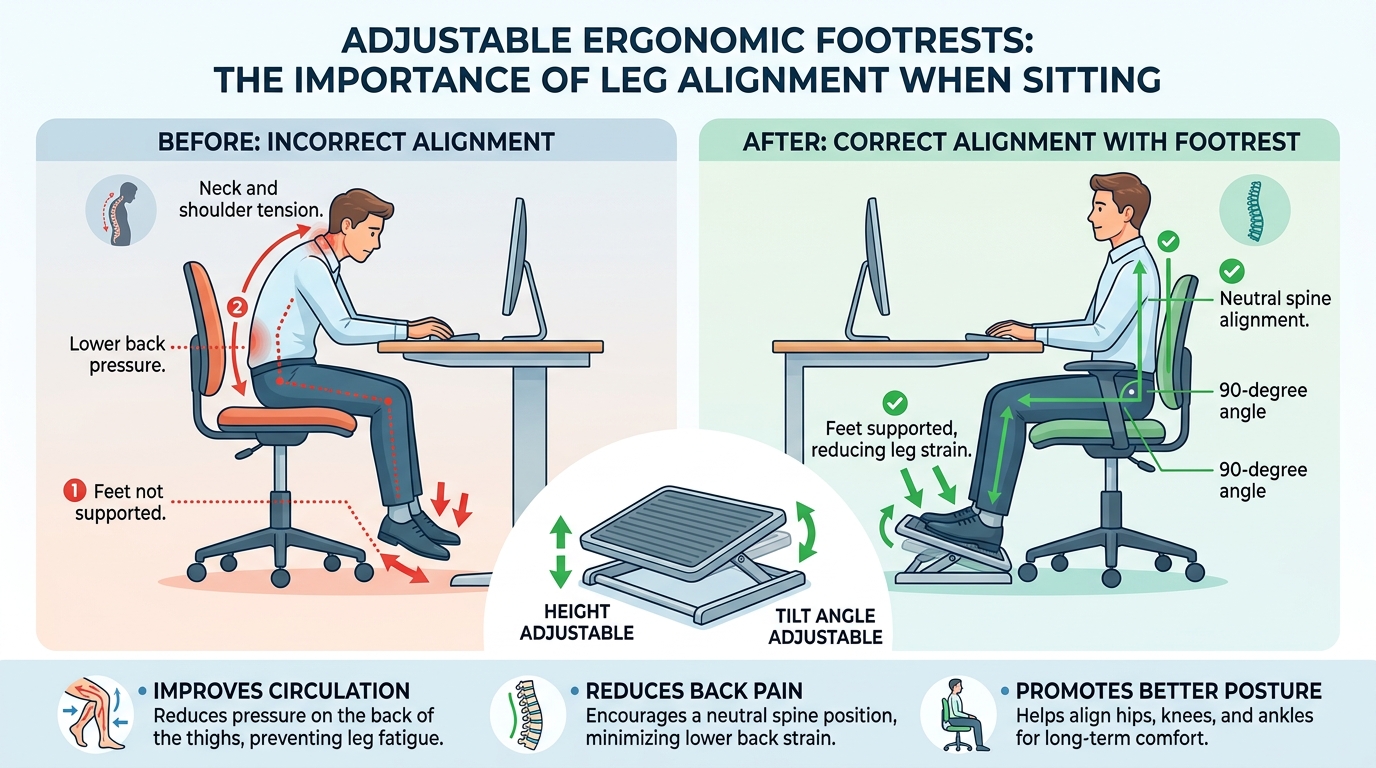
Do you often find yourself sitting at your desk for long hours, only to end the day with sore legs and an uncomfortable posture? The problem many of us face when sitting for extended periods is the lack of proper leg alignment, leading to discomfort, fatigue, and even potential health issues. Without the right support, our legs can dangle, causing strain on our muscles and joints, ultimately affecting our overall well-being.
Imagine the frustration of trying to focus on your work while constantly shifting in your seat, unable to find a comfortable position for your legs. The consequences of neglecting proper leg alignment can go beyond just physical discomfort – it can impact your productivity, concentration, and even lead to chronic pain over time. You deserve to feel at ease and stay focused during your workday, without the distraction of constant discomfort.
But fear not, there is a simple yet effective solution to this common problem: adjustable ergonomic footrests. By incorporating a footrest into your workspace, you can easily adjust the height and angle to achieve optimal leg alignment, promoting better circulation and reducing strain. Say goodbye to restless legs and hello to improved comfort and productivity. So why settle for discomfort when you can make a small change that will have a big impact on your daily work experience? Join us as we explore the importance of leg alignment when sitting and discover how adjustable ergonomic footrests can revolutionize your workspace.
Benefits of Using an Ergonomic Footrest
Improved Posture: Using an ergonomic footrest can help maintain proper posture by reducing strain on your lower back and legs. By elevating your feet slightly, it encourages better alignment of your spine and hips, promoting a more ergonomic sitting position.
Enhanced Circulation: Sitting for extended periods can lead to reduced blood flow in the legs, causing discomfort and potential health issues. An ergonomic footrest can help alleviate this by allowing you to change positions and keep your feet moving, preventing stiffness and promoting better circulation.
Comparing Different Types of Footrests
Adjustable Footrests
Adjustable footrests offer the flexibility to customize the height and angle to suit your individual needs. This adaptability makes them suitable for a wide range of users and work setups, allowing for optimal comfort and support.
Rocking Footrests
Rocking footrests provide a dynamic sitting experience by allowing you to gently rock back and forth while seated. This subtle movement can help improve circulation, reduce fatigue, and promote active sitting, enhancing overall comfort and productivity.
Benefits of Using an Ergonomic Footrest
Improved Posture: An ergonomic footrest helps in maintaining proper posture by promoting better alignment of the spine, reducing strain on the lower back, and preventing slouching. By elevating your feet slightly, it encourages a more natural sitting position and reduces the pressure on your lower body.
Enhanced Circulation: Using an ergonomic footrest can help improve blood circulation in your legs by reducing the pressure on your thighs and preventing them from pressing against the seat. This can reduce the risk of developing conditions like deep vein thrombosis and varicose veins, promoting overall vascular health.
How to Choose the Right Footrest for Your Needs
Adjustability: Look for a footrest that offers height and angle adjustments to accommodate your specific sitting preferences and provide maximum comfort. Adjustable footrests allow you to customize the position to suit your individual needs and reduce strain on your legs and lower back.
Material and Surface: Consider the material and surface of the footrest to ensure optimal comfort and durability. Look for a non-slip surface to prevent your feet from sliding and choose a material that is easy to clean and maintain. Additionally, opt for a footrest with a textured surface to massage your feet and improve circulation while sitting.

Importance of Leg Alignment in Sitting Posture
Leg alignment is crucial for maintaining proper posture and preventing discomfort or pain while sitting for extended periods. When your legs are properly aligned, it helps to reduce strain on your lower back, hips, and knees. A footrest plays a key role in ensuring that your legs are positioned at the correct angle to promote good blood circulation and reduce pressure on your lower body.
By using an adjustable ergonomic footrest, you can customize the height and angle to achieve optimal leg alignment while sitting. This not only enhances your comfort but also contributes to overall musculoskeletal health. Investing in a quality footrest can make a significant difference in your sitting experience and long-term well-being.
Tips for Proper Leg Alignment While Sitting
When sitting at a desk for prolonged periods, it’s important to pay attention to your leg positioning to avoid strain and discomfort. Ensure that your feet are flat on the floor or supported by a footrest to maintain a 90-degree angle at your knees and hips. Avoid crossing your legs or sitting with one leg tucked under you, as this can lead to uneven pressure distribution and potential postural issues.
Additionally, taking regular breaks to stand up, stretch, and change your sitting position can help alleviate muscle tension and improve circulation in your legs. Practicing good sitting habits and incorporating ergonomic accessories like a footrest can significantly enhance your overall comfort and well-being throughout the day.
Importance of Leg Alignment in Sitting Posture
Proper leg alignment is crucial for maintaining good posture and preventing discomfort or pain in the lower back, hips, and legs. When sitting for extended periods, such as at a desk or in front of a computer, incorrect leg positioning can lead to strain on the muscles and joints. Ensuring that your feet are properly supported and aligned can help distribute your body weight evenly, reducing the risk of developing musculoskeletal issues.
Tips for Proper Leg Alignment While Sitting
One effective way to achieve proper leg alignment while sitting is by using an adjustable ergonomic footrest. Position your feet flat on the footrest with your knees at a 90-degree angle and your hips slightly higher than your knees. This posture promotes better blood circulation and reduces pressure on the lower back. Additionally, taking short breaks to stretch your legs and change positions throughout the day can also help maintain proper leg alignment and prevent stiffness.
Comparing Different Types of Footrests
Adjustable Footrest: This type of footrest allows you to customize the height and angle to find the most comfortable position for your feet. It is versatile and suitable for various sitting arrangements.
Rocker Footrest: A rocker footrest provides a gentle rocking motion that can help improve circulation and reduce leg fatigue. It is ideal for those who like to keep their feet in motion while sitting.
Under-Desk Footrest: An under-desk footrest is designed to fit neatly under your desk, providing support and comfort without taking up extra space. It is a great option for maintaining proper leg alignment while working.
Tilting Footrest: This type of footrest tilts to allow for dynamic movement and shifting of weight, promoting better posture and reducing strain on your legs and lower back. It is a good choice for those who need to change positions frequently.
Cushioned Footrest: A cushioned footrest offers soft support for your feet, reducing pressure and enhancing comfort during long periods of sitting. It is suitable for those looking for a cozy and relaxing foot support option.
Enhancing Comfort and Health with an Ergonomic Footrest
Enhancing Comfort and Health: In conclusion, investing in an ergonomic footrest can significantly enhance both comfort and health while sitting for extended periods. By providing proper support and promoting better alignment of the legs and spine, an ergonomic footrest can help reduce the risk of musculoskeletal issues such as lower back pain, leg swelling, and poor circulation. Additionally, using a footrest can improve overall posture and productivity by creating a more ergonomic and comfortable work environment.