
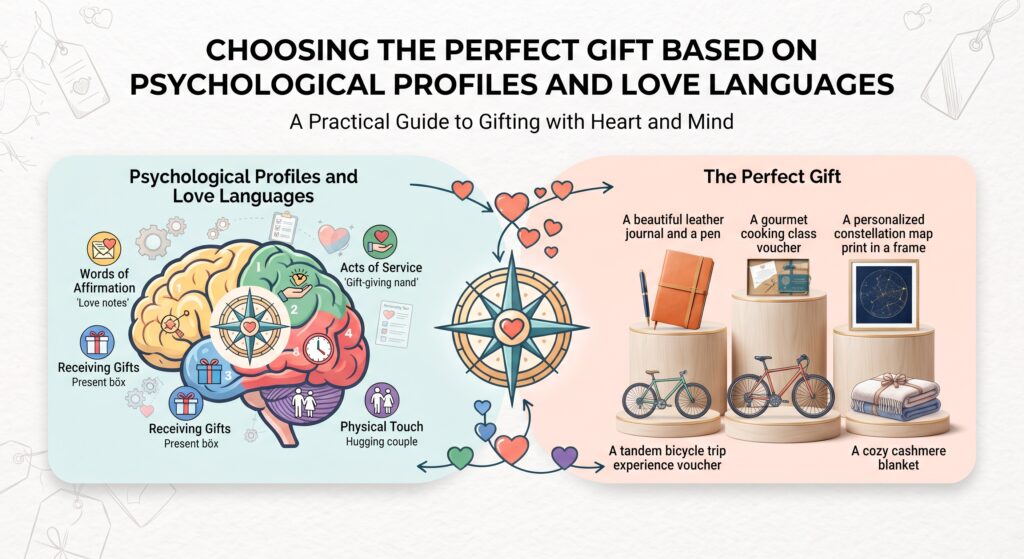
Finding the right gift can often feel like a stressful guessing game. We spend hours browsing online stores or wandering through shopping malls, hoping to stumble upon something that conveys our appreciation. However, the secret to an unforgettable present isn’t about spending a fortune or picking the trendiest item on the market; it is about alignment.
By combining modern consumer psychology with Dr. Gary Chapman’s renowned framework of The 5 Love Languages, you can transform gift-giving from a random transaction into a profound expression of emotional connection.
1. The Intersection of Psychology and Gift-Giving
From a psychological standpoint, gifts act as physical symbols of invisible emotions. According to social exchange theory and behavioral psychology, receiving a gift triggers a release of dopamine and activates the brain’s reward circuits, but only if the gift resonates with the recipient’s internal values and identity.
When a present matches a person’s psychological profile, it validates who they are and how they want to be perceived. Conversely, a mismatched gift can inadvertently signal a lack of attention or understanding, creating emotional friction. To master the art of giving, we must first look at how people naturally give and receive love.
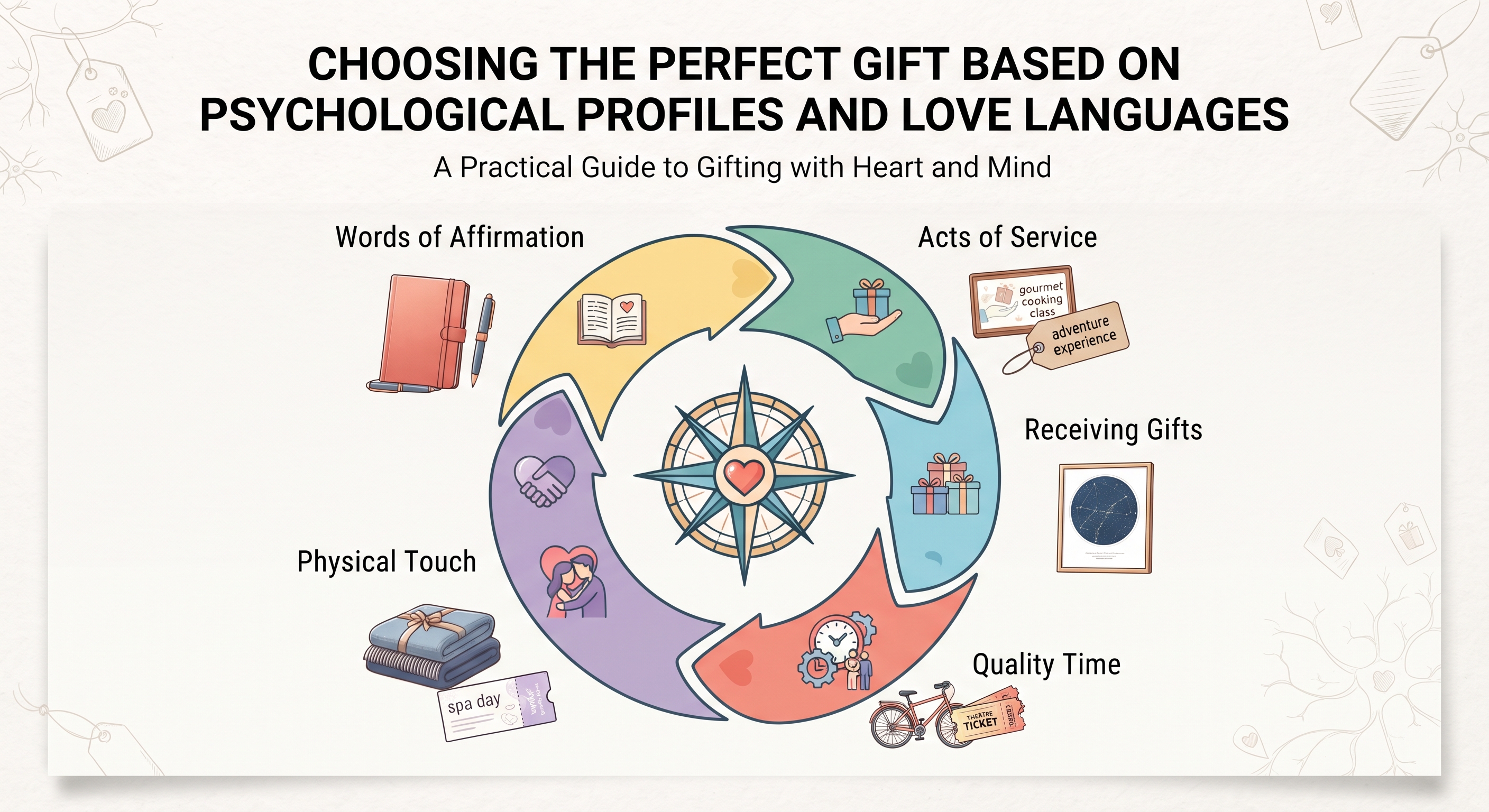
2. Decoding the 5 Love Languages for Strategic Gift Selection
Dr. Chapman’s framework identifies five distinct ways people express and interpret emotional affection. Each “language” requires a completely different approach when selecting a physical item or experience.
A. Words of Affirmation
-
The Psychological Profile: These individuals cherish verbal expressions of appreciation, encouragement, and emotional validation. They read between the lines and look for the thought and meaning behind every gesture.
-
How to Choose Their Gift: The physical item matters far less than the message attached to it.
-
Gift Ideas: A hand-written letter detailing a specific memory or why you value them; a custom-engraved piece of home decor with a meaningful date or quote; a photo album accompanied by heartfelt, descriptive captions explaining why each moment mattered.
-
Avoid: Generic gift cards or mass-produced items that look like an afterthought.
-
B. Acts of Service
-
The Psychological Profile: For these practical individuals, actions speak louder than words. They value when someone takes a burden off their shoulders, saves them time, or makes their daily routine smoother and more efficient.
-
How to Choose Their Gift: Look for utility, high functionality, and problem-solving capabilities. Focus on items that eliminate friction in their daily lives.
-
Gift Ideas: High-end kitchen appliances or smart-home automation tools (such as efficient multicookers or high-performance coffee machines) that streamline meal prep; a professional subscription service that automates a tedious household chore; organizing tools that restore order to their workspace.
-
Avoid: Purely decorative dust-catchers or items that require high maintenance or assembly effort.
-
C. Receiving Gifts (The Visual Symbol)
-
The Psychological Profile: People with this love language do not necessarily equate gifts with materialism; rather, they view them as tangible evidence of love and remembrance. They appreciate the effort, time, and visual presentation of a thoughtful object.
-
How to Choose Their Gift: Presentation and thoughtfulness are paramount. They notice the details—from the wrapping paper to how well you remember their subtle hints dropped weeks prior.
-
Gift Ideas: A luxury item they have been eyeing for months but wouldn’t buy for themselves; a beautifully curated gift box featuring artisanal, high-end home goods; a limited-edition collectible or design piece tailored to their specific aesthetic tastes.
-
Avoid: Practical, utilitarian items meant strictly for utility (like cleaning supplies or basic utility tools) unless explicitly requested.
-
D. Quality Time
-
The Psychological Profile: These individuals value shared experiences, undivided attention, and creating memories together above all else. Material items are secondary to companionship.
-
How to Choose Their Gift: The ideal gift should serve as a vehicle for shared moments or deep connection.
-
Gift Ideas: A weekend getaway package; tickets to a live concert, workshop, or culinary masterclass; a board game or cooking kit designed to be enjoyed together on a cozy evening at home.
-
Avoid: Solitary gadgets or standalone items that encourage isolation.
-
E. Physical Touch
-
The Psychological Profile: While physical touch itself cannot be wrapped in a box, individuals with this preference respond powerfully to tactile sensations, comfort, and items that invoke warmth, coziness, and bodily relaxation.
-
How to Choose Their Gift: Focus on tactile luxury, textures, and items that promote physical well-being and sensory comfort.
-
Gift Ideas: Premium weighted blankets, luxurious cotton or cashmere loungewear, high-end ergonomic pillows, or items designed to create a spa-like sanctuary at home.
-
Avoid: Cold, rigid, or purely aesthetic objects that lack tactile appeal.
-
3. Matching Consumer Profiles with Intentional Purchases
Beyond love languages, observing a person’s everyday lifestyle and consumer habits helps refine your choice. We can categorize recipients into three distinct behavioral profiles:
-
The Efficiency-Driven Minimalist: They hate clutter and value functional spaces. Best approach: Invest in multi-use, durable kitchenware or minimalist home organization systems that declutter their environment.
-
The Sensory Connoisseur: They appreciate quality, aesthetics, and sensory experiences (fine food, design, comfort). Best approach: Choose artisanal products, gourmet coffee accessories, or high-end ambient home decor.
-
The Experiential Planner: They live for memories and future projects. Best approach: Opt for tools that facilitate hobbies, travel preparation, or home leisure experiences.
Conclusion
Choosing the perfect gift is an exercise in empathy and observation. By identifying whether your recipient values practical acts of service, tactile comfort, emotional validation through words, shared experiences, or the tangible symbol of a thoughtful object, you shift your approach from guessing to precision.
The next time you search for a present, look past the price tag and ask yourself: Which psychological need does this fulfill, and how well does it speak their love language? The answer will guide you straight to success.